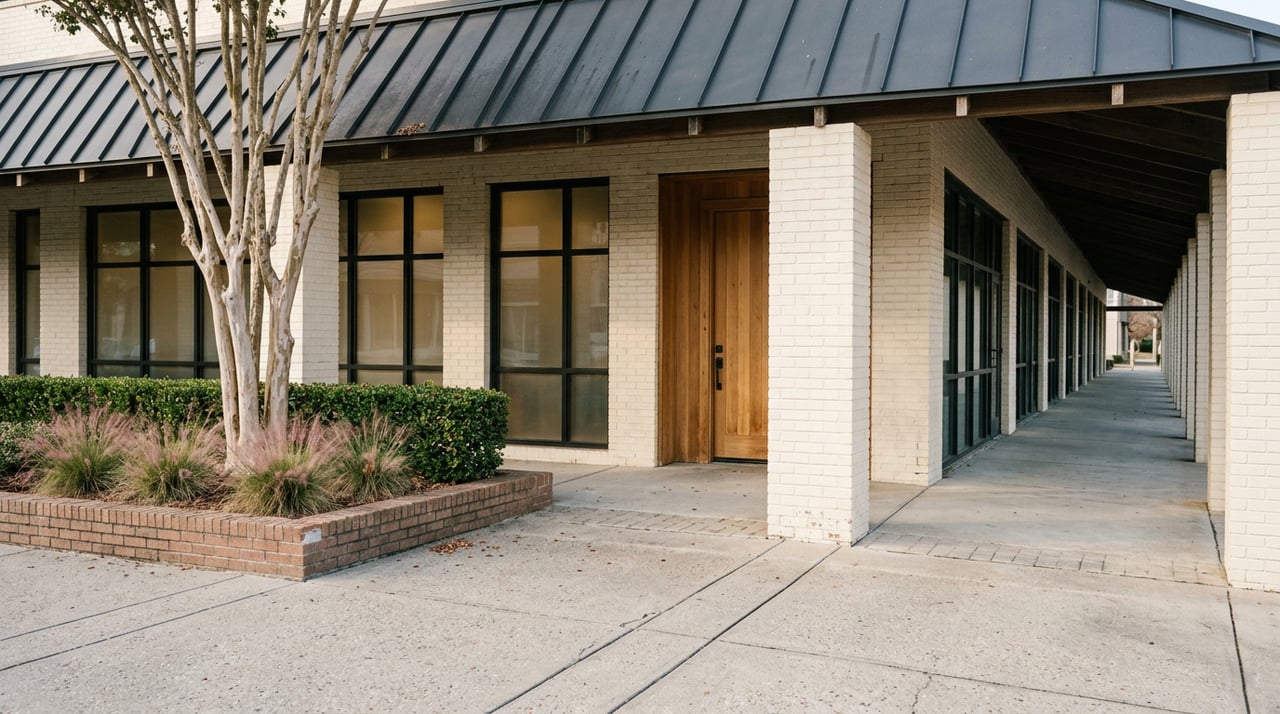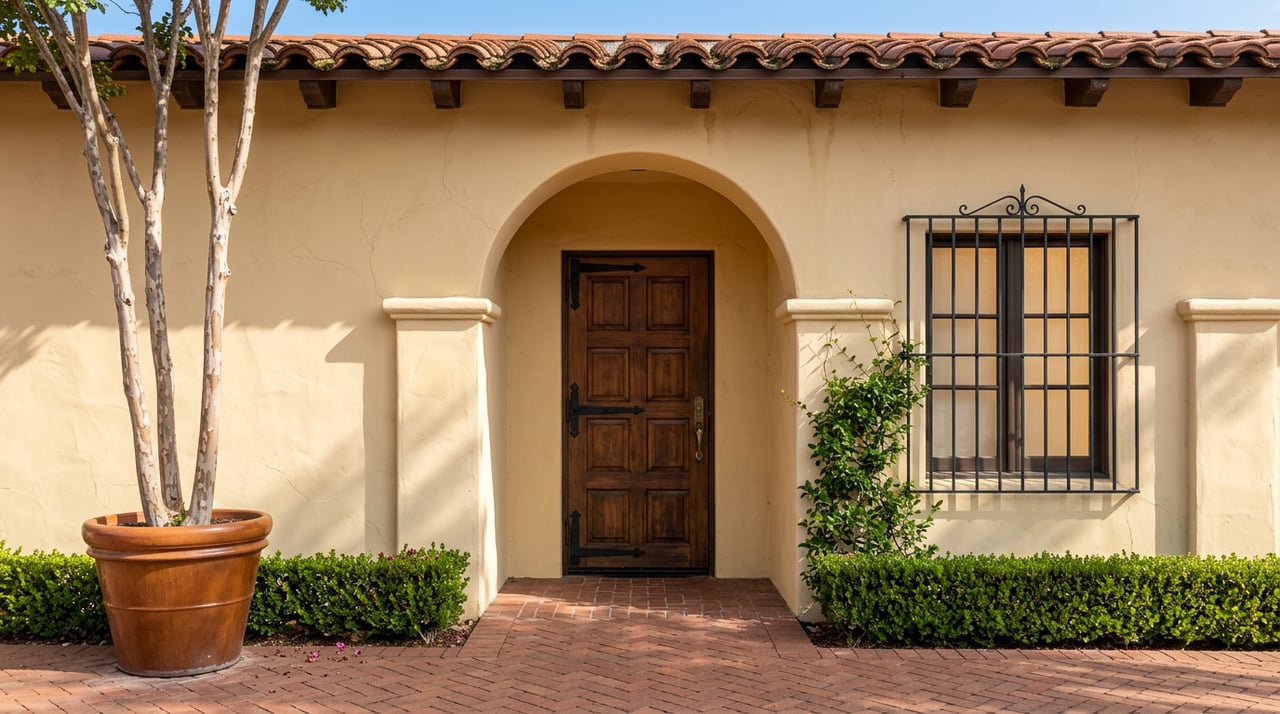
Walk past Café Pacific on a Saturday morning and the view is the one your grandparents would have recognized. Same Spanish Mediterranean towers. Same red tile roofs. Same seven buildings that have anchored the corner of Preston Road and Mockingbird Lane since 1931, back when Highland Park Village became the first self-contained shopping center in the country. The Village earned National Historic Landmark status in 2000, and everything about its pitch to shoppers rests on that word: landmark, fixed, permanent.
That permanence has always been the point. It is also, for the first time in years, not quite accurate. A filing with the Texas Department of Licensing and Regulation shows the Village's owners are adding square footage to two of its seven buildings, and the project is already underway. If you have noticed plywood or sawhorses near the Douglas Avenue side this summer, that is not routine upkeep. It is the start of the first real expansion the property has seen in a long while, and it is happening alongside a retail and dining refresh that has nothing to do with construction permits at all.
The Filing That Says the Quiet Part
According to the permit filing reported by People Newspapers, Highland Park Village LP is adding roughly 3,500 square feet to Building C, which fronts Douglas Avenue, and about 7,000 square feet to Building D, which sits at the corner of Douglas and Mockingbird, a corner that functions as one of the main gateways into the property. Architecture firm OMNIPLAN, which has worked on Village projects before, is designing the addition. The filing puts the start date at June 1 with completion targeted for June 1, 2027, which means the clock has already been running for two months.
The number worth sitting with is not the square footage. It is what happened to the price tag. As Hoodline reported, the same filing originally estimated the project at $25 million before revising the figure down to $11 million. For a property built to look untouched for a century, that revision tells you something about how the owners are approaching the work. This is not a gut renovation. It is a scaled-back, buttoned-up addition, sized to add leasable space without disturbing the Mediterranean facades that keep the Village on historic registers in the first place.
Two Storefronts Already Say Coming Soon
The Village's own site already lists two spaces in Building C as coming soon, according to Hoodline's reporting, which means leasing conversations were underway well before permits cleared. Building D currently houses the Village's own management offices and sits among tenants that include Dior, Beretta, and Oscar de la Renta, so whatever moves into the new square footage there will be doing so in some of the most expensive retail real estate in North Texas. None of the coming tenants have been named publicly yet. What is public is that the property is making room for them now, mid-build, rather than waiting for a ribbon cutting to start filling space.
Who Actually Owns the Village Now
The name behind the filing, Highland Park Village LP, ties back to Gillon Property Group, a Dallas firm formed in 2025 to consolidate the Washburne and Hunt-Hill family real estate holdings, according to Hoodline's review of the ownership structure. The Washburne family has been connected to the property for a while. That group acquired Highland Park Village in 2009 for roughly $170 million, a price reported at the time by the Dallas Morning News. Gillon has stayed active since the consolidation, including a separate deal to acquire Watters Creek, another North Texas retail property, so the Village expansion is one piece of a broader push rather than an isolated project.
What's Already New, No Permits Required
While the construction filing works through its timeline, the tenant roster has already moved. Carolina Herrera opened a new storefront at the Village this year, and the opening was paired with a collaboration with Miron Crosby, the Dallas-based bootmaker founded by sisters Lizzie Means Duplantis and Sarah Means Ward. Wes Gordon, Carolina Herrera's creative director, traveled in for the opening alongside company president Emilie Rubinfeld, and the collection that debuted merged both brands into three shared designs. It is a small detail, but it fits a pattern worth watching as the new square footage fills in: a global luxury house pairing itself with a hometown name rather than opening in isolation.
The Restaurant That Becomes a Different Restaurant After Dark
The most interesting change at the Village right now costs nothing in permits and required no filing at all. Sadelle's, the New York deli concept that has anchored the property since it opened, spends its evenings as something else entirely. Thursday, Friday, and Saturday nights, the space transforms into No. 1 STEAK, a pop-up steakhouse created by Chef Mario Carbone alongside Chef Keith Potter, built around premium cuts from Rosewood Ranches, a curated wine list, and a dedicated Martini Menu with caviar and shrimp cocktail on the side. By day, the same space runs a rotating butcher counter selling prime cuts to go. It is one restaurant living two schedules, and it says something about how the Village's newer operators are treating the property. Nobody needs a permit to reinvent three nights a week.
What to Actually Watch For
If you are walking the Village over the next few months, here is what separates this stretch from an ordinary season of storefront turnover:
- Fencing or staging near the Douglas and Mockingbird corner is tied to the Building D addition, not a maintenance project
- The two spaces already marked coming soon in Building C are the first concrete sign of who might join Dior, Beretta, and Oscar de la Renta as neighbors
- No. 1 STEAK only runs Thursday through Saturday evenings, so a weeknight visit to Sadelle's still gets you the standard menu
- The completion target for the current filing is June 2027, so this is a slow build, not a weekend closure
None of this changes what the mainstays offer. Mi Cocina still runs its third-floor bar the way it always has. Bistro 31 still seats its temperature-controlled patio for weekend brunch. Café Pacific still requires proper dress and still draws people back after forty years for the same reason it always has. The expansion and the tenant moves are happening around those fixtures, not instead of them.
The Read on This Stretch
Highland Park Village sells itself on the idea that nothing here changes, and for most of its history that has been close to true. What is happening right now is a specific, bounded exception. A filing that got cheaper before it got approved. Two spaces already spoken for before the concrete work starts. A hometown boot brand sharing a storefront with a global fashion house. A dining room that becomes a different restaurant three nights a week without anyone renaming the awning. None of it changes the postcard view from the sidewalk. All of it means the Village you walk through in 2027 will have more room in it than the one you walked through last year, filled by tenants who were already lining up before the first permit cleared.
If you live in Highland Park and you're watching how a neighborhood this settled still finds ways to grow, that instinct is worth having when it comes time to think about your own property here too. Chris Holmes-Hill works this market closely and can talk through what any of this means for your home, your timeline, or your next move in the Park Cities. Let's Connect.